

Moose
£7.99
The elk, also called moose in North America, is the largest specimen of its family: The cervids. This is due to the impressive scale of its fan-shaped woods. It feeds mainly on grass, aquatic plants, foliage, branches, bark and other plants. It is a solitary animal that only comes into contact with other members of its species during the breeding season. Did you know that after this period the momentum sees its antlers fall and then regrow during the winter.

Gnu
£6.99
The gnu, of the bovidae family, is an animal that can be found in South Africa, Kenya or Tanzania. This herbivorous animal is rather sedentary and only moves when it is hungry. An important seasonal migration then takes place. It is not uncommon for zebras, gazelles and elands to join the herd of gnu on these journeys, giving rise to gatherings of more than two million heads.

Papo Beaver Animal Figure
£3.99
Papo animals are distinguished by their accuracy and realism, the details are such that we might think that they will set in motion.

Oryx Antelope
£7.99
The oryx gazelle, also often called oryx antelope is a herbivorous ruminant that is mainly found in the desert dunes of Namibia or in the arid savannas of the Kalahari. The large black lines it has on its sides as well as its legs and head make it particularly recognizable. In the event of an attack by a predator, the oryx antelope is able to flee by reaching a top speed of 90km / h!

Greater Flamingo
£6.99
Do you know that it is partly because of its food that the flamingo&s plumage is pinkish? It feeds mainly on aquatic invertebrates, as well as their larvae and eggs. We especially find crustaceans including salina artemia rich in carotenes which contribute to the pink color of its plumage. The pink flamingo is the most widespread species of flamingo. It walks its long and elegant silhouette in lagoons and salt lakes. Its beak, unique among birds, allows it to evacuate the salt contained in the water which passes through it. The flamingo sleeps standing on one or two legs, its head hidden under a wing.
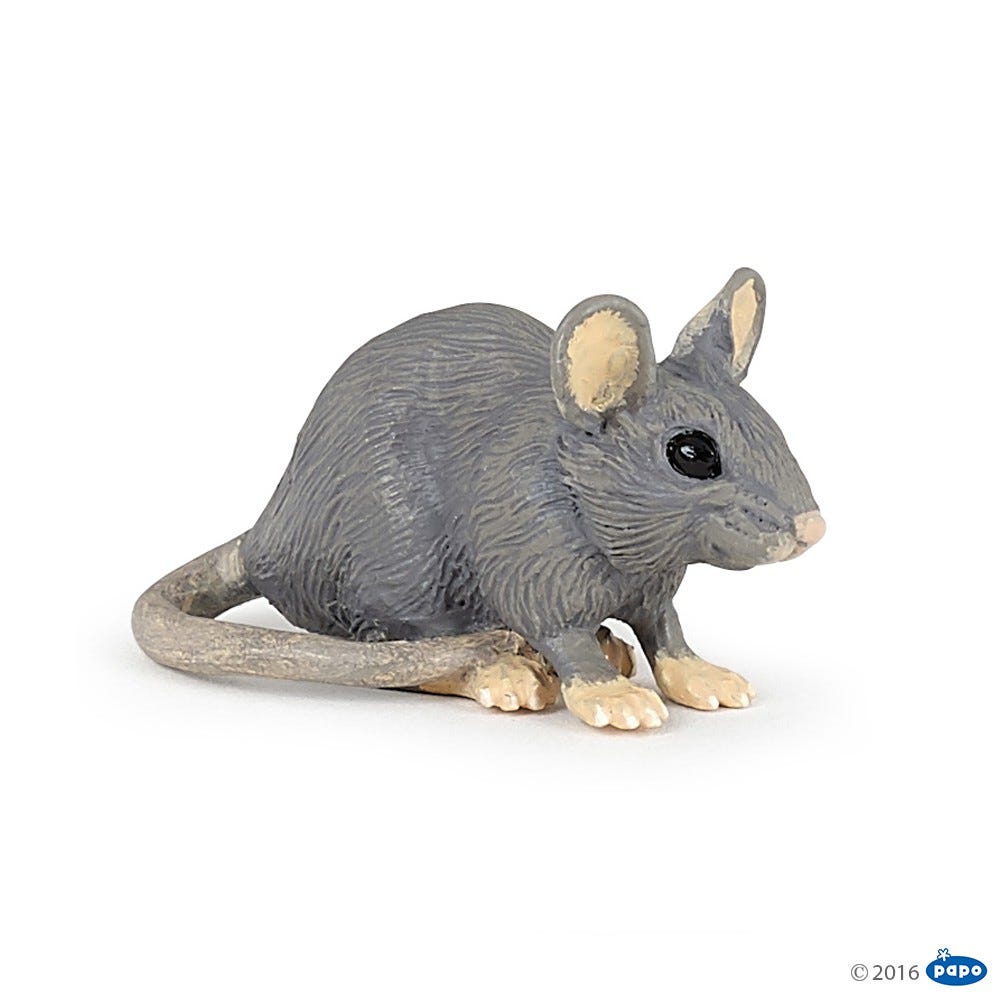
House Mouse
£3.99
Do you know that the grey mouse is one of the most widespread mammals on Earth? The grey mouse is also called house mouse because it most often lives near or in human habitations. It is a nocturnal animal which has the ability to multiply but which also has many predators such as cats, snakes or even foxes. For the lattests, it is an easy prey to catch.

Elephant
£8.99
The African elephant is the largest terrestrial mammal in the world! It is therefore quite natural that he reigns supreme in the savannah. What characterizes him is undoubtedly a huge trunk, large ears that he uses to cool himself and huge defenses. The trunk is actually an extension of their lip and nose, allowing the elephant to communicate, to bring water and food to his mouth, to pull and transport branches and to shout. His tusks are made up of ivory and enamel and are actually two teeth, used as a tool and as a defense in combat. The elephant lives in herds of around 20 individuals and spends most of its time looking for food. He feeds mainly on leaves, bush or tree branches, fruit or bark.

Giraffe Head Up
£8.99
Isn&t it gigantic? From its height of 5.50 meters, the giraffe dominates the savannah and holds the title of highest terrestrial mammal. Easily recognizable by its very long neck, the giraffe is fawn-colored with large orange spots and has at the top of its head 2 small horns called ossicones. This herbivore loves leaves (especially acacia) which it can graze at the treetops. It can eat more than 50 kg of leaves per day! It also has a very long tongue which can measure more than 50 cm.
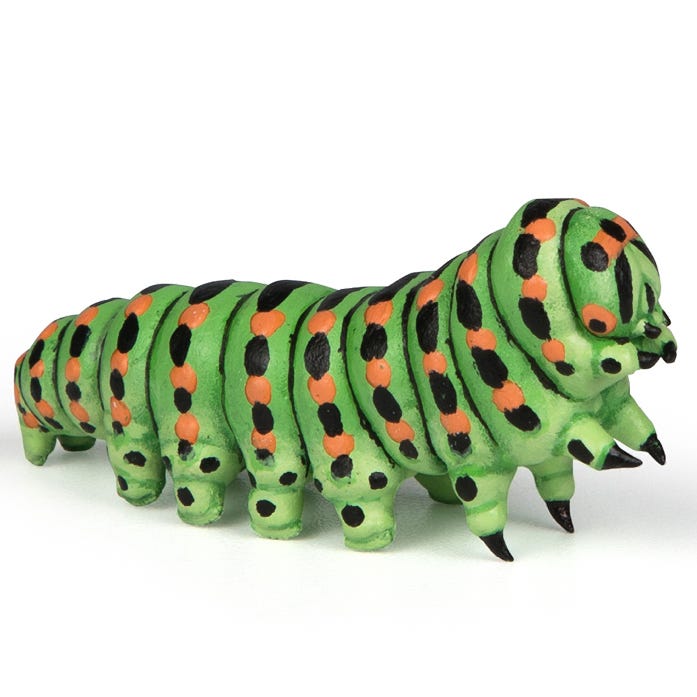
Caterpillar
£6.99
Papo animals are distinguished by their accuracy and realism, the details are such that we might think that they will set in motion.

Grasshopper
£7.99
Grasshoppers are common insects that are found all over the world, and which thanks to their long hind legs are able to move by jumping. They particularly appreciate the heat and the sun and live in tall grass, fields or even meadows. In case of danger they can dig 10 to 20 cm tunnels to hide.